
The Hidden Risks of Manual Balance Confirmations
Manual balance confirmations have long been vital for verifying financial balances with third parties such as customers, suppliers, and lenders. However, this paper-based audit confirmation process is slow, error-prone, and vulnerable to fraud — threatening the accuracy, reliability, and security of financial reporting in today’s evolving audit standards environment.
Balance Confirmations: Why & Concerns
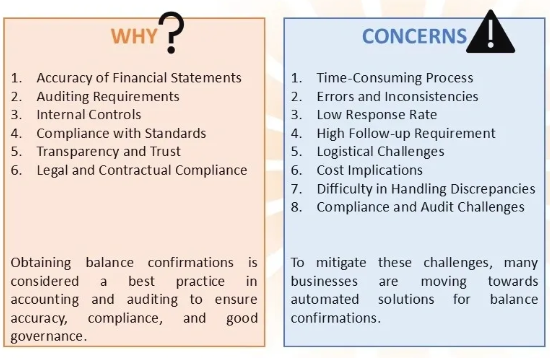
Risks of Errors and Process Inefficiencies
The manual confirmation process—from preparing and mailing letters to reconciling responses, is time-consuming and highly susceptible to human error.
Common issues include:
- Data entry errors and missing responses
- Delayed reconciliations and document mismatches
Such account balance confirmation errors can cause material misstatements, weakening stakeholder trust and regulatory compliance.
As highlighted in SA 505 (External Confirmations), audit evidence from independent third parties is more reliable than internally generated data. Manual processes, however, often lack strong controls and direct auditor access, reducing the credibility of audit evidence.
Exposure to Fraud and Data Security Vulnerabilities
Physical confirmations are easy to forge, lose, or intercept, especially when sent via unsecured mail. This exposes organizations to fraud, data breaches, and regulatory risks.
SA 505 stresses that auditors must ensure the authenticity and confidentiality of responses, something manual confirmations struggle to guarantee without secure digital exchange mechanisms.
Operational Delays and Compliance Challenges
Manual confirmation systems frequently suffer from:
- Non-responses or delayed replies
- Lost communication trails
- Lack of tracking mechanisms
- Disjointed follow-up procedures
These challenges delay financial closings, increase audit exceptions, and create bottlenecks in compliance timelines.
According to SA 505, auditors must implement effective confirmation procedures to obtain sufficient appropriate audit evidence based on the assessed risk of material misstatement. However, the manual confirmation process often fails to meet these efficiency and reliability standards, necessitating a more automated and transparent audit approach.
Automation: The Strategic Imperative
Automation eliminates the limitations of manual balance confirmations by:
- Ensuring accurate and secure responses

- Providing real-time tracking and audit trails
- Reducing response time and human intervention
Automated confirmation platforms strengthen audit quality, ensure regulatory compliance, and enhance stakeholder confidence.
Transitioning to automated balance confirmations is not just operationally smarter—it’s a compliance-driven transformation aligned with SA 505 standards and the future of reliable financial reporting.